
The Long Black Veil
Long Black Veil is a classic country murder ballad about a man who is falsely accused of murder and chooses death rather than reveal a secret affair. His alibi would prove his innocence, but telling the truth would expose that he was with his best friend’s wife.
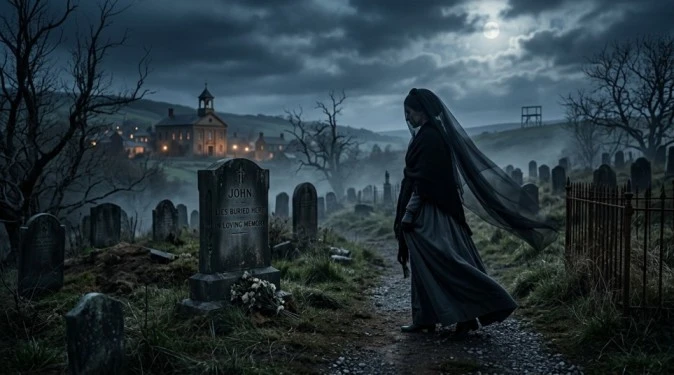
The woman later visits his grave at night wearing a dark veil. This ending gives the song its central mystery. The veil can represent secrecy, grief, mourning, forbidden love, guilt, and the lasting consequence of a hidden relationship.
Song Overview
Readers may also encounter the song under searches such as the long black veil, the long black veil song, or long black veil song lyrics. These phrases refer to the same classic country murder ballad. Searches such as the long black veil lyrics, lyrics to long black veil, lyrics long black veil, and lyrics the long black veil may also lead readers to the song, while this article explains its story and meaning.
Detail Information
Song Long Black Veil
Songwriters Danny Dill and Marijohn Wilkin
First recorded by Lefty Frizzell
Year 1959
Genre Country / murder ballad
Famous versions Lefty Frizzell, Johnny Cash, The Band, Joan Baez, Dave Matthews Band
Long Black Veil was written by Danny Dill and Marijohn Wilkin. Dill later discussed the story behind the song in an oral-history interview with the Country Music Hall of Fame and Museum.
Song Meaning
The Long Black Veil meaning centers on a terrible choice between life and secrecy. The narrator is accused of a murder he did not commit. He could provide an alibi, but doing so would reveal his secret relationship with his best friend’s wife.
Instead, he remains silent and accepts execution. His decision turns the song into a story about sacrifice, loyalty, forbidden love, and guilt.
Long Black Veil
Writer(s): Marijohn Wilkin, Danny Dill
Ten years ago, on a cold dark night
There was someone killed ‘neath the town hall light
There were few at the scene, but they all agreed
The slayer who ran looked a lot like me
The judge said, “Son, what is your alibi?
If you were somewhere else, then you won’t have to die”
I spoke not a word, though it meant my life
For I had been in the arms of my best friend’s wife
She walks these hills in a long black veil
She visits my grave when the night winds wail
Nobody knows, nobody sees
Nobody knows but me
The scaffold stood high, eternity neared
She stood in the crowd and shed not a tear
But sometimes at night when the cold winds moan
In a long black veil, she cries on my bones
She walks these hills in a long black veil
She visits my grave when the night winds wail
Nobody knows, nobody sees
Nobody knows but me
Nobody knows but me
The Central Secret
The central secret in Long Black Veil is the narrator’s relationship with the wife of his closest friend. The woman knows the truth, but neither person publicly explains what happened between them.
That secrecy is what makes Long Black Veil tragic. The narrator protects the relationship even when the consequence is death.
Why the Secret Costs Him His Life
The murder accusation creates a direct conflict between truth and secrecy. His alibi could save him, but the truth would expose the affair.
He therefore chooses silence. The choice is extreme, but it gives the narrator’s sacrifice its emotional weight.
The Meaning of “Nobody Knows but Me”
The idea that nobody knows the full truth emphasizes isolation. The narrator dies carrying a secret that cannot be openly shared.
The woman remains alive with the same secret, which connects her grief to his death.
What Is the Song About?
At its center, it is about a man who is wrongly accused of murder and refuses to reveal his alibi because the alibi would expose his forbidden relationship.
Long Black Veil is not simply a murder story. It is also a story about loyalty, betrayal, secrecy, love, and consequence. The final image of the woman visiting his grave adds another layer of grief and mystery.
The Story Behind the Song
Danny Dill and Marijohn Wilkin
Danny Dill and Marijohn Wilkin wrote the song in 1959. Their writing turned a dramatic murder scenario into a country ballad built around a secret that survives beyond death.
The Three Reported Inspirations
Long Black Veil has been linked to several reported inspirations rather than one confirmed real-life event. Accounts have connected the writers’ idea to a song by Red Foley, a newspaper story involving an unsolved murder, and the legend of a veiled woman associated with Rudolph Valentino’s grave.
These sources helped shape the atmosphere of the song, but the song is best understood as a fictionalized murder ballad rather than a direct retelling of one documented case.
How the Song Became a Country Classic
Lefty Frizzell made the first recording in 1959, and the song became a major country recording. Later artists introduced it to new audiences, helping the song remain part of the country and folk repertoire.
Written by Danny Dill and Marijohn Wilkin, “Long Black Veil” was completed in 1959 and first recorded by Lefty Frizzell. The Long Black Veil recording was later selected for preservation in the National Recording Registry.
Why Does the Narrator Refuse to Give His Alibi?
The narrator refuses because his alibi would reveal the secret affair with his best friend’s wife.
That decision creates the song’s central conflict. He has a way to defend himself, but using it would expose the woman and destroy the secret they have protected.
His silence becomes a form of sacrifice. He accepts hanging rather than publicly betray the woman he loves.
What Does the Black Veil Symbolize?
The black veil carries several possible meanings within the story.
Mourning
Black clothing traditionally connects with mourning. The woman’s veil therefore reflects her grief after the narrator’s execution.
Secrecy
The veil also hides the woman’s identity and emotions. It becomes a visual representation of the secret that cannot be spoken.
Forbidden Love
Because the woman was involved in a secret relationship with the narrator, the veil can be read as a symbol of forbidden love that remains hidden from society.
Hidden Grief
The woman cannot openly mourn the narrator as a lover. Her grief must remain private, making the veil a symbol of hidden sorrow.
Guilt
The story also leaves room for guilt. The narrator dies to protect the secret, while the woman must live with the knowledge of what his silence cost him.
The Connection Between Life and Death
The woman’s visits to the grave connect the living and the dead. The narrator’s story ends with his death, but the secret relationship continues to shape the woman’s life.
Who wrote Long Black Veil?
The song was written by Danny Dill and Marijohn Wilkin.
Danny Dill
Danny Dill was a Nashville songwriter who worked across country music. His songwriting career included several notable country compositions.
Marijohn Wilkin
Marijohn Wilkin was a successful songwriter and publisher whose work became an important part of Nashville’s songwriting history.
How They Created the Song
Dill and Wilkin developed the song around the idea of a man who could prove his innocence but chooses not to reveal the secret behind his alibi.
The result was a compact narrative built around murder, forbidden love, secrecy, and sacrifice.
Who Originally Recorded the Song?
Lefty Frizzell made the original recording in 1959.
The Long Black Veil original recording helped establish the song before later versions by artists such as Johnny Cash and The Band brought different musical interpretations to it.
Who Made the Song Famous?
The question of who made long black veil famous has more than one reasonable answer because its reputation developed through several important recordings.
Lefty Frizzell introduced the recording to country audiences, while later versions by Johnny Cash, The Band, Joan Baez, and others expanded its reach.
This history is one reason the song has remained relevant across country, folk, and roots music.
Johnny Cash and the Song
Johnny Cash recorded the song in 1965 for Orange Blossom Special. His version gave the story a darker, more dramatic presentation.
Johnny Cash’s 1965 Studio Recording
Cash’s 1965 recording placed the song alongside the classic country and folk material on Orange Blossom Special. His deep vocal delivery suited the song’s themes of death, guilt, and secrecy.
Johnny Cash and Joni Mitchell
Cash and Joni Mitchell performed the song together on the first episode of The Johnny Cash Show in 1969. Their performance introduced the song to a wider television audience.
Cash’s Later Performances
Cash returned to the song in later performances, helping keep it connected with his broader body of narrative country songs.
The Most Notable Covers
There have been many recordings and interpretations over the decades. A long black veil cover can sound very different depending on whether an artist emphasizes the country, folk, or darker narrative side of the song.
The Band’s Version
The Band recorded the song for their 1968 album Music from Big Pink. Their version gave the story a roots-rock setting while retaining the song’s narrative structure.
Joan Baez’s Versions
Joan Baez recorded the song and brought her folk style to its story of secrecy, death, and forbidden love.
Dave Matthews Band
Dave Matthews Band has also performed the song, introducing it to another generation of listeners through live performance.
Is the Song Based on a True Story?
The Long Black Veil true story question does not have a simple yes-or-no answer. The song was inspired by several reported stories and ideas, but it is not a straightforward account of one verified historical event.
The murder, secret affair, execution, and woman in the veil form a fictional narrative. The song combines real-world inspiration with storytelling devices common to murder ballads.
Like other traditional-sounding songs built around tragedy and mystery, Long Black Veil uses a narrative style that leaves important details unstated. This storytelling approach can also be seen in House of the Rising Sun lyrics, another song whose enduring appeal comes partly from its dark atmosphere and ambiguous story.
The Real Stories That Inspired the Song
The reported inspirations include a newspaper account of an unsolved murder, a Red Foley song, and the story of a mysterious veiled woman connected with Rudolph Valentino’s grave.
These influences help explain the song’s atmosphere, but they do not establish that the narrator or his lover were real historical people.
Ending Explained
The Long Black Veil ending is deliberately mysterious. After the narrator is executed, the woman continues to visit his grave at night while wearing a dark veil.
Who Is the Woman Behind the Veil?
The woman is understood within the story as the narrator’s secret lover and the wife of his best friend. Her hidden identity is central to the tragedy.
Why Does She Visit His Grave?
Her visits suggest continuing grief and devotion. She cannot publicly acknowledge her relationship with the dead man, so the grave becomes the place where she can privately remember him.
Does the Narrator Speak From Beyond the Grave?
Long Black Veil is narrated from the perspective of the dead man, which gives the story an almost supernatural quality. This can be read literally as a voice from beyond the grave or as a poetic storytelling device.
Themes in the Song
The major Long Black Veil themes include:
- Secrecy: The central truth remains hidden.
- Forbidden love: The narrator and the woman maintain a relationship that cannot be publicly acknowledged.
- Loyalty: The narrator protects the woman even at the cost of his own life.
- Sacrifice: He gives up his chance of proving his innocence.
- Betrayal: The hidden affair creates a painful conflict between friendship and romantic love.
- Death: The execution gives the story its tragic consequence.
- Grief: The woman carries the emotional burden after his death.
- Guilt: Both characters are connected to a secret that has devastating consequences.
What Is the Message of the Song?
The Long Black Veil message is open to interpretation, but the story clearly shows the cost of secrets. The narrator’s decision protects one truth while destroying his own future.
The song also asks how far loyalty and love can go when they conflict with honesty. Its ending leaves the listener with grief rather than a simple resolution.
Frequently Asked Questions
What is the history behind the song?
The song was written by Danny Dill and Marijohn Wilkin and first recorded by Lefty Frizzell in 1959. It later became known through recordings by Johnny Cash, The Band, Joan Baez, and other artists.
What is the meaning of the song?
The Long Black Veil meaning centers on secrecy, forbidden love, sacrifice, grief, and death. A wrongly accused man chooses not to reveal his alibi because doing so would expose his relationship with his best friend’s wife.
What does the black veil symbolize?
It can represent mourning, secrecy, hidden grief, forbidden love, and the emotional connection between the living and the dead. These are interpretations of the song’s imagery rather than a single explanation officially stated by the writers.
Who wrote the song?
Danny Dill and Marijohn Wilkin wrote the song.
Who originally recorded the song?
Lefty Frizzell made the first recording in 1959.
Who made the song famous?
Its recognition grew through several important recordings and performances, including versions by Lefty Frizzell, Johnny Cash, The Band, Joan Baez, and later artists.
Did Johnny Cash write the song?
No. Johnny Cash recorded the song, but Danny Dill and Marijohn Wilkin wrote it.
What is the ending of the song?
The narrator is executed after refusing to provide his alibi. The woman later visits his grave at night wearing a black veil, keeping their secret hidden.
What is the Best Version of the Song?
The Best version of Long Black Veil depends on what a listener wants from the song. Lefty Frizzell’s recording represents its early country history, Johnny Cash’s version gives it a darker country character, and recordings by The Band and Joan Baez offer different roots and folk interpretations.
Comparing the versions by vocal style, arrangement, and historical context gives a clearer picture than treating one recording as universally definitive.
Is the black veil connected to The Black Veil short story?
The phrase the black veil short story can refer to Nathaniel Hawthorne’s “The Minister’s Black Veil,” a separate literary work. Hawthorne’s story also uses a black veil as a symbol, but it is not the same story as the country song.
Final Thoughts
The song remains memorable because its story is simple but emotionally layered. A man faces a murder accusation, has an alibi, and still chooses execution rather than expose a secret affair.
The woman in the veil completes the tragedy. Her visits to the grave turn the song into a lasting story about secrecy, love, loyalty, grief, and consequence.
About the Author
Md. Shahadat Hossain is a music content writer and founder of LyricsMedia. He writes about song meanings, stories, themes, and symbolism in simple, reader-friendly language.
His goal is simple: to help readers understand not only what a song says, but why it feels meaningful.